 +1 (773) 234-5010
Point-to-point limo service fits a direct suburban pickup and destination. Hourly Chicagoland transportation fits a vehicle that must wait, make several stops, or remain with your group. The right choice depends on the route and schedule, especially when suburban distances turn one extra stop into a long detour.
A Glenview-to-O’Hare ride is usually point-to-point. A party collecting households in several suburbs and returning after an uncertain finish time may work better hourly.
Direct suburban trips fit point-to-point service
Use point-to-point service for one scheduled movement between a home, airport, hotel, office, or venue. It keeps the reservation tied to a defined route instead of paying for a vehicle throughout the day.
Report every requested stop. Collecting a second family ten miles away is not a quick curb stop. Waiting, route changes, and extra mileage can affect the charge.
A separate point-to-point return may cover the trip home without keeping a vehicle at the venue. This works best when the end time and passenger group are predictable. Confirm both rides in writing; an outbound reservation does not automatically include the return.
Hourly service works when the vehicle must stay involved
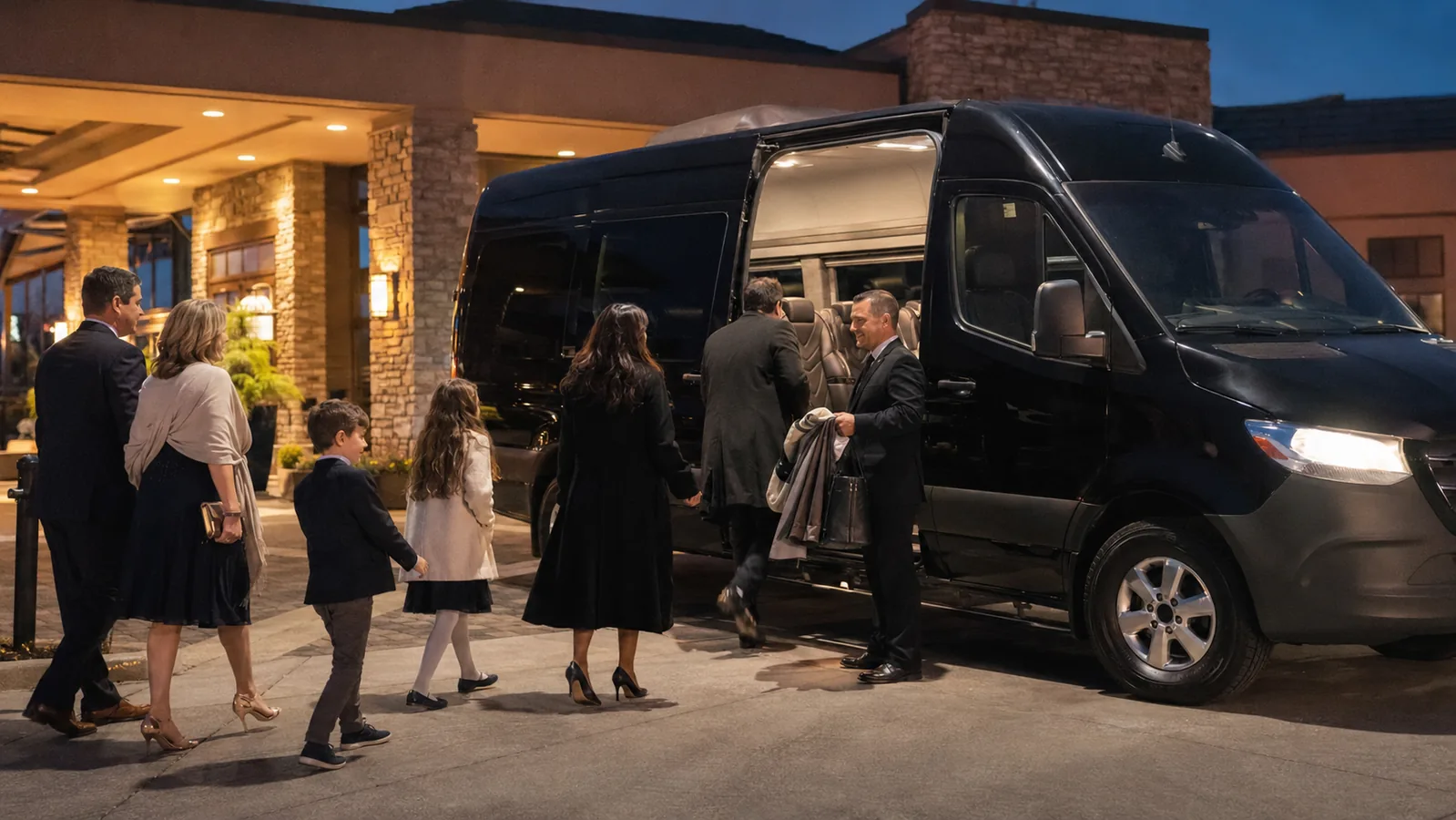
Hourly transportation may suit a suburban wedding, business roadshow, funeral, prom, or family celebration. The same vehicle can remain assigned through several movements and an uncertain end time.
Ask about minimum hours, garage time, overtime, tolls, parking, and gratuity. Chicagoland distances mean the billing clock may cover more than passenger time.
Ask whether the same chauffeur and vehicle are expected throughout the reservation. Operational substitutions can occur, so state any reason continuity matters, such as stored equipment, child seats, or passengers needing the same accessible setup.
Airport transportation usually works as a direct ride
Most suburban airport trips need one vehicle from a home to O’Hare or Midway. Point-to-point service matches that purpose. On arrival, flight tracking helps coordinate the pickup without holding the vehicle for a guessed landing time.
Hourly service may help when travelers arrive on several flights, stop at different homes, or continue into a business itinerary. Use the O’Hare transportation guide for Chicago suburbs to plan the pickup method.
Multiple households require route math
One large van can keep a group together, but it may create a long collection route. Two direct SUVs can sometimes reduce the first passenger’s travel time. Map the homes, venue, and return destinations before selecting hourly service.
Compare capacity and luggage using the Chicagoland vehicle guide. Passenger seats alone do not measure cargo space.
Also consider the return route. Dropping passengers across several suburbs after midnight can add substantial time. Provide the preferred order, but let dispatch review whether another order is safer and shorter.
Plan the return separately
An event arrival has a firm deadline. The return may depend on speeches, overtime, weather, or when children are ready to leave. Hourly service provides continuity when the group values an available vehicle.
Separate point-to-point returns may cost less when exact departure times and passenger groups are known. For several households, confirm the drop order before service begins.
For children or older passengers, waiting outdoors after an event may be difficult. An hourly vehicle can reduce uncertainty, but the chauffeur may still need to stage away from the entrance until the group is ready.
Weddings often combine both choices
A wedding party may use an hourly van through photos and ceremony movements. Grandparents may use a direct sedan. Guests may have scheduled outbound and return transfers.
The Chicagoland wedding transportation timeline helps identify who needs continuous transportation and who only needs one ride.
Compare full charges and service limits
Give the office the same facts for both quotes: all addresses, expected service hours, passenger count, luggage, vehicle preference, waiting, and return plan. Confirm the following:
- Hourly minimum and billable start point
- Point-to-point waiting and stop charges
- Parking, tolls, gratuity, and overtime
- Rules for changing times or addresses
The better quote is the one that covers the real itinerary without relying on assumptions.
Prepare a complete suburban itinerary
Send every address with the correct suburb and ZIP code. Include the event start, required arrival, expected finish, number of households, luggage or equipment, and the mobile number of the person traveling. Identify child seats or mobility needs early.
Ask the office to compare one hourly vehicle with separate direct rides when both appear practical. Keep the vehicle class consistent so the price comparison reflects the billing format rather than different capacities.
Choose around the route
Use point-to-point service when the ride has a clear beginning and end. Use hourly service when the group needs one vehicle across a changing schedule. Submit every address through the Chicagoland reservation form so the office can price and confirm the right format.

