 +1 (773) 234-5010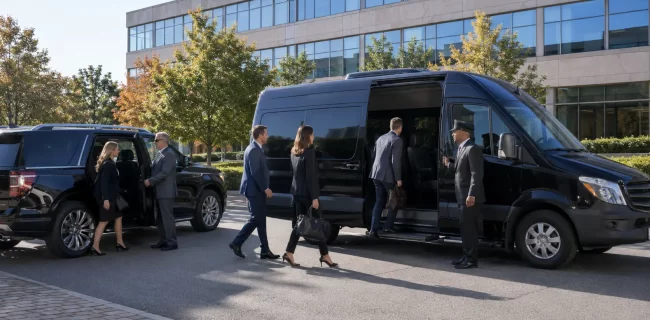
Corporate group transportation from the Chicago suburbs requires a different plan from a short downtown transfer. Teams may begin at homes, office campuses, suburban hotels, or separate branches before traveling to O’Hare, Midway, McCormick Place, a Loop meeting, or an evening event.
A practical itinerary groups passengers by geography, protects fixed appointments, and includes a clear return plan.
Map every starting point
List the office, hotel, and home pickups. Group nearby passengers only when doing so does not create a long detour. A central office pickup can simplify the trip, but it should not force everyone to drive past their natural route.
Name the exact building entrance. Large campuses may have several lobbies and internal roads. Add the company suite, security desk, or visitor entrance when it helps the chauffeur reach the correct door.
Work backward from the city appointment
Use the required arrival time at the downtown office, convention hall, or restaurant. Add unloading, walking, registration, and security. Then add a traffic allowance and boarding time at the suburban pickup.
Expressway travel can change because of construction, weather, crashes, and rush periods. Mileage alone does not predict the time from Schaumburg, Naperville, Northbrook, Oak Brook, or another suburb.
Choose a vehicle mix for people and equipment
A sedan may serve one executive. An SUV offers luggage room for a small airport party. An executive van keeps a department together. Multiple vehicles can serve different offices or return schedules.
Count presentation cases, product samples, coats, and luggage. Compare choices in the Chicagoland vehicle guide. The right capacity provides both seats and working comfort.
Coordinate suburban hotels and airports
Visitors may stay near the office rather than downtown. Collect their hotel, flight, terminal, phone, and luggage information. Decide whether they travel directly to the office or check in first.
O’Hare often fits north and northwest suburban trips, while Midway may work well for some western and southwest destinations. Flight availability and the exact final address matter more than a general rule.
Build one manifest for the group
Assign every passenger to each leg. Name a lead traveler for every vehicle. One transportation coordinator should approve changes and communicate with dispatch.
Send passengers a short instruction with pickup time, exact door, destination, and contact method. Keep billing notes and operational details in the master itinerary rather than the traveler message.
Plan split schedules in advance
Not everyone returns at the same time. Executives may remain downtown for dinner. Sales staff may leave a convention early. Visiting clients may return to a hotel while employees go back to the office.
Reserve those movements before the trip. Several planned departures are easier to manage than last-minute vehicle requests during rush hour.
Connect meetings, team events, and client dinners
A corporate day may continue after the final presentation. Confirm the restaurant or event entrance, passenger count, and desired arrival. Decide whether the vehicle waits or returns later.

Publish the return time before the event. Choose one well-lit door. If the group has early and late departures, place each traveler on the correct manifest.
Use hourly or point-to-point service intentionally
Hourly service may support a changing multi-stop schedule. Point-to-point reservations can suit airport pickups, fixed office transfers, and scheduled returns. A hybrid plan often works well: dedicated service for executives and fixed group movements for everyone else.
See hourly limousine service when comparing options.
Prepare for schedule changes
Choose one communication path. When a meeting runs late, the coordinator contacts dispatch and then sends the confirmed revision to passengers. Several people giving separate instructions can pull a vehicle away from its assigned group.
Reserve the complete Chicagoland itinerary
Provide all pickup points, local times, passenger counts, flight numbers, equipment, destinations, and return schedules. Use the online reservation form to begin. A connected plan lets employees and clients focus on the work while each suburban and Chicago movement stays organized.
Plan parking, tolls, and corporate billing
Longer suburban trips may include tolls, airport charges, parking, waiting time, or an hourly extension. Name the person who can approve those items and provide any cost center or purchase-order reference in advance. Visiting clients should not become involved in internal billing questions.
If several departments share transportation, attach each vehicle or trip to the correct account code. Clear billing instructions make the final invoice easier to review.
Use a final departure checklist
Before leaving the office, confirm the passenger count, meeting materials, destination entrance, return time, and lead traveler. Before the city event ends, repeat the check for the suburban return. A two-minute review is especially useful when employees have split into early and late groups during the day.

